
THE MEMORY OF WATER
Central Australia 50,000 years ago
Every waterhole is smaller and farther away
than the one before and the plain no longer remembers
the forest that once stood here. They stagger on,
a clan of exhausted Diprotodon
seeking escape from the flooding dryness,
their mighty front claws scuffing up dust
that floats above in a choking cloud
and then settles on their fur,
mingling with the ash from the fires.
Ever more slowly they follow the memory of water
where they will leave their massive bones to puzzled scientists
and the legend of the Bunyip to the Dreamtime.
AFTER THE BUSHFIRE
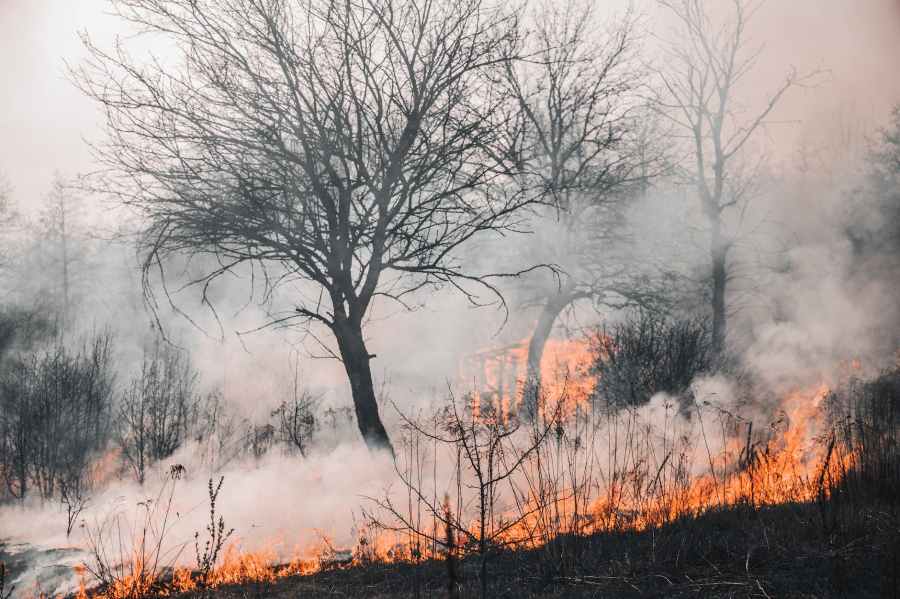
The smouldering night has exhausted itself
and sunrise bleeds away the bruises,
slipping a red gold mask over the landscape,
eyes half shut against the drifting ash.
Burnt trees stand in piles of cinders
that will soon be cold and dense as omens;
syllables of a scattered alphabet
asking questions of their ragged shadows.
Underneath the forest’s puzzled face
and the ground’s grey bankruptcy lie seeds
that have waited years for this, as if to say
let me breathe again, give me back the sky.
THE TOMORROW SYNDROME
By the time we get there, it will be ours,
the future; no shocks, safe and familiar.
I want to believe that, I really do,
but there is so much to not think about
and there will always be more from now on
lurking just out of sight like hyenas
trailing us through each resource war desert,
flooded shoreline and crowd of refugees,
every newly-created slum or ruin,
waiting to crush the bones of resistance.
Published in Gaia Literary Review
AN EGYPTIAN VULTURE IN ROSCOMMON
Searching for death and certain to find it,
this carrion drone is a guerrilla
soaring on newly-ignited thermals
in the brutal asymmetric warfare
between ourselves and the burning world,
a yellow-faced toolmaker dropping stones
on the rigid eggs of our complacency.
This ambassador carries its warning
to the ocean’s edge on two-metre wings;
the mission might fail, but the message was sent.
THE OXYGEN MAKERS
Stromatolites in Shark Bay, Western Australia
Midday, water’s edge
Don’t take breathing for granted;
it hasn’t always been so easy.
The fresh twenty-one percent we live on
was made by these slimy cyan domes
over billions of silent years, puff by puff.
Somewhere we’ve failed, made it all go wrong;
but these patient workers could do it all again.
Late afternoon, ankle deep
I throw my phone in the warm shallow water;
I could never tell you what it is I see.
I throw in my watch; counting seconds is pointless
where nothing has changed since before there were fish.
I throw in my keys; the iron they are made of
was oxidised by these round turbines
while the air was still rank from creation.
I throw in my sunglasses; without these domes
there never would have been an ozone layer.
Early evening, knee deep
I’m not afraid to go further out
into the maternal warmth of the water
that wraps my legs like a birth blanket;
the plesiosaurs stay far away
from these extra salty shallows.
A pterodactyl kite shadow flits
across my shoulder, flying on
to better hunting. I breathe deep;
the air is richer than you’ll ever know,
our twenty-one percent tastes more like thirty
in the dense Cretaceous heat.
Sunset, floating face down
I am as old and as young as the domes;
there is still so much to do to change the world.
My back soaks up the late Pre-Cambrian sun
just as they do but there is so little life
in the air, so little; all we need is time.
THE GREAT DYING
The predators are returning to the cities;
their gleaming eyes flit through rubbish dumps
and shine in the black depths of parks,
the only things really alive under the moon.
The golden lie still rings out,
but leafing through old books is no use now,
nor are the latest discoveries
of different ways of flying.
Death has climbed in through the open window
and the last of our fugitives
will soon be tracked and caught,
like tigers crushed by the coils of giant snakes.
Published in D.O.R., issue 5
SOLITUDE
The juice of bitter herbs still stains my lips. Once,
I chewed them to enhance the sweetness of my meal,
but now their biting tang cleanses my palate
to receive only the brittle stones of solitude.
Those trip me up, whether I walk frantic city corridors
or rocky wastes. I have become some sort of beast
that inhabits the ever-expanding fringes
of a civilised desert, or maybe a puny god
aloof from those who would reject as soon as recognise
his remote but verifiable existence.
I scorched my feet on burning roads of envy
and ground my teeth on pearls of wisdom,
but now I live beyond their call.
Published in Cape, issue 5 volume 1


 S.C. Flynn